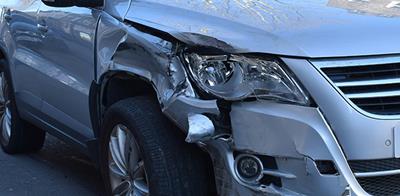
Your car is written off because your insurer has decided it’s a ‘total loss’ and damaged beyond economical repair. What happens next?
In this guide, we explain why insurers write off cars, the steps to take if your vehicle is written off and what to do if you feel the insurance settlement is too low.
EASY AS HACK
When your car is written off:
- Tell your insurance company and start a claim
- Check your finance agreement if you have one
- Agree the settlement amount from your insurer
- Send the insurer your car’s logbook (V5C) and MOT certificate
- Wait for the salvage company to pick up the car
- Apply via GOV.UK to keep your registration number if you want it
- Tell DVLA that your car has been written off
At a Glance
Your car could be written off if it was stolen or damaged in an accident and was not worth repairing because repairs would cost more than its market value.1
What does it mean if your car is written off?
When your car is written off it means it was stolen or damaged and your insurer has assessed it as too expensive to repair compared to its market value.1
The 2 main types of write-offs are known as:
- Repairable write-offs – your insurance company decides your car could be repaired for safe return to the road, but the repair costs are higher than its market value.
- Non-repairable write-offs – your car is too badly damaged or unsafe and must be scrapped.
Your insurer will typically declare your car a total loss (write off) and issue you with a payment (also known as a settlement). Scrapping a written-off car in this way is the same as selling it to your insurer.2
If your car is stolen and not recovered this is not considered a write off or total loss1 and if the claim is covered on your insurance, they will agree a valuation for the stolen car.
What are the different car write-off categories?
What happens with your car will depend on how it is categorised as a write-off under the Association of British Insurer’s Salvage Code of Practice (CoP),1 which Ageas supports along with other insurers.
The ABI code classifies damaged vehicles in 4 categories:1 and 3
- H4: Category A – Scrap only. A qualified technician assesses the damage as beyond repair and the entire vehicle must be crushed once any recyclable parts have been removed. For electric vehicles, the HV battery may be removed and recycled separately.
- H4: Category B – Break up for parts. The body shell is crushed but other functional parts can be salvaged, recycled and reused. This category also applies once the car is dismantled and reused under categories S and N.
- H4: Category S – Structural damage to the frame or chassis. The car is reusable once it’s professionally repaired and made roadworthy. It also applies to EVs where the battery is part of the floor structure.
- H4: Category N – Non-structural damage. The frame and chassis are not damaged, so the car can be used again once it’s repaired and any safety critical items replaced. If an EV’s high voltage systems are damaged, it must be non-structural to be classed as this category.
What happens after a car is written off?
When a car is written off, its market value just before the accident or loss will be calculated and included in the report sent to your insurer.
Your insurer will then offer you the cost of replacing your car at its market value, which the Financial Conduct Authority terms “a fair estimate”, defined as “the price your car would have fetched immediately before the accident”. If you agree with the settlement, the insurance company will pay you, and you can buy another vehicle that’s similar in age, mileage and condition.
What do I need to do if my car is written off?
- You’ll need to contact your insurance company immediately after the accident or loss to start the claims process.
- If your claim is accepted and your insurer decides the car is a write-off, the claims department will offer you a settlement amount. Assuming you agree, and your documents are in order, they’ll send you the agreed amount.
- Check your finance agreement, if applicable. Your insurer may agree to pay the finance company first if there’s an outstanding loan on the car.
- Send your insurer the vehicle logbook (V5C), keeping the yellow section about selling, transferring or part-exchanging your car to the motor trade. Send them your current MOT certificate as well.
- Your insurer will arrange for a salvage agent to collect your written-off car and dispose of it.
- If you want to keep your car’s registration number, you can apply to take it off the vehicle atUK.
- Tell DVLA that your insurance company has written off your car and scrapped it. If you don’t, you could be fined £1,000.
Can you dispute a car write-off?
You can complain to the Financial Ombudsman about a write-off decision if you think the valuation or the repair assessment was unfair.4
However, you’ll need to gather your own evidence, such as independent valuations, as proof4 of undervaluation.
Part of your research could include comparing your insurer’s valuation with similar cars, around the same age, make, model, mileage, and condition.
Once you have collected your proof, you’ll need to request a reassessment.
Can you buy back and repair a written off car?
Buying back and repairing a written-off car depends on the write-off category.
- At the insurer’s discretion, you may be able to buy back category N and S write-offs from them and keep the category N car’s logbook.3 However, most insurers will only keep the car on cover briefly after an accident. As the original policy is cancelled when the car is written off, you will need to repair and MOT the vehicle within your insurer’s short timeframe for finding alternative cover.
- If you have bought back a category S car, you must send the logbook to your insurer and apply for a free duplicate V5C using form V62.
- Category A and B vehicles must be scrapped and crushed3 as they are too dangerous to drive or not worth repairing.
Before buying it back, you need to understand the repair, salvage and insurance costs (by law, you can’t buy back category A or B cars)5 and whether the vehicle can be made roadworthy and pass an MOT.
How much will you get if your car is written off?
If your car is written off, your insurer will typically pay you its market value just before the accident and damage occurred:
- Minus any policy excess and other payments, such as an outstanding car loan or premiums owed to the insurer.
- According to ABI, the payout amount (market value) should be the same whether you have third party fire and theft or comprehensive insurance.1 However, third party cover affects your eligibility for a payout on your own vehicle.
- Damage to your own car isn’t covered under third party cover, so if you caused the accident, you’d receive nothing for your vehicle. However, if another driver was at fault you can claim against their insurance.
- Guaranteed asset protection (GAP) insurance, if you have it, will cover the gap between what you paid for your car and the amount your insurer pays out if it’s written off.1
Find out how to make an insurance claim.
What happens to your car insurance when your car is written off?
When your car is written off, your insurer will typically cancel your car insurance policy because you no longer have a vehicle to insure.
If you are getting a new car, the process of transferring your policy is the same whether you’re replacing a written-off car or upgrading.
Learn about Ageas car insurance.
FAQs
Will I get a road tax refund if my car is written off?
Yes, you will get a road tax refund once you inform the DVLA that the car has been written off. You’ll get a cheque for any remaining complete months.6
Will I get an insurance refund if my car is written off?
Insurers generally do not give insurance refunds if a car is a write-off. At Ageas, if you pay in instalments, any outstanding premium may be deducted from your settlement.
What happens if I have outstanding finance on my written-off car?
If you have outstanding finance on your written-off car, your insurance company may pay the finance company first as they own the vehicle until the final payment.
If the market value is more than the outstanding balance, the balance is usually paid to you. However, if the value is less than the remainder you owe, you may need to pay the balance, unless you have GAP insurance.
Will a write off affect my no claims bonus?
Your no-claims bonus will not be affected if the accident was not your fault and the insurance company recovers all costs from the other party.
Some insurers, including Ageas, offer optional no-claims discount protection to preserve your no claims bonus after a claim.
What happens if your car is written off and it is not your fault?
If the accident leading to the write-off wasn’t your fault, all costs are usually recovered from the at-fault driver or their insurer, and your no claims bonus is unaffected.
Insurers like Ageas may pay first, then recover all money paid from the at-fault party’s insurer.
Do you need to tell your insurer if your car has been written off?
Yes, you must tell your insurer if your car has been written off, or you risk getting a £1,000 fine from the DVLA.2
Sources
- https://www.abi.org.uk/products-and-issues/choosing-the-right-insurance/motor-insurance/written-off-or-total-loss-vehicles/ and the code itself: https://www.abi.org.uk/globalassets/files/publications/public/motor/2025/codepracticecategorisationmotorisedvehiclesalvagemay2025.pdf
- https://www.gov.uk/written-off-vehicle
- https://www.gov.uk/scrapped-and-written-off-vehicles/insurance-writeoffs
- https://www.financial-ombudsman.org.uk/consumers/complaints-can-help/insurance/motor-insurance/vehicle-valuations-write-offs
- https://www.trader.co.uk/blog/how-much-does-it-cost-to-buy-back-a-written-off-car
- https://www.gov.uk/vehicle-tax-refund