As temperatures start to drop, our thoughts turn to wintry wonderlands and snow-capped hilltops.
The UK gets an average of 13 days of lying snow a year1, according to the Met Office. While it's rare for the whole of the UK to be covered in a blanket of snow, there are some areas that get more of the white stuff than others.
We explore where snow is most likely to happen in each of the home nations, based on the average number of days when snow or sleet falls.
Easy As Hack
If heavy snow is forecast, stock up on emergency supplies including non-perishable food, essential medicines, bottled water and batteries in case you get stuck at home without power.
At a glance
- The Cairngorms is the snowiest place in the UK
- The North Pennines village of Copley gets the most snow in England
- Sheffield is the snowiest city in the UK
1. The Cairngorms, Scottish Highlands
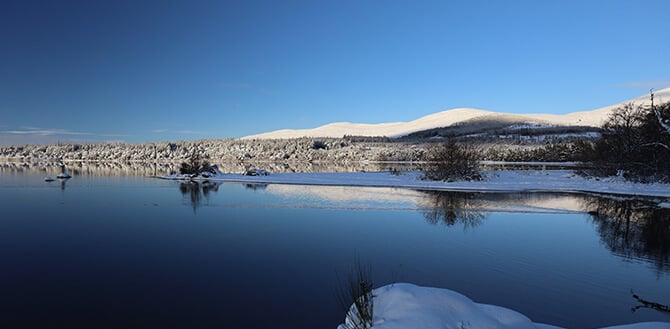
As you might expect, the UK’s premier snow sports destination leads the way for snowfall. Flakes drop from the sky on more than 70 days in a typical year, according to historical Met office data2.
The Cairngorms National Park is home to some of the snowiest locations in the UK, including Aviemore and Ballater. With fantastic skiing and snowboarding available, beginners and seasoned skiers alike can be found taking to the slopes of Cairngorm Mountain between December and March every year.
There’s also a mountain railway, which offers an alternative way to enjoy spectacular snowy views of the peaks.
Average snowfall days a year: 762
2. Fair Isle
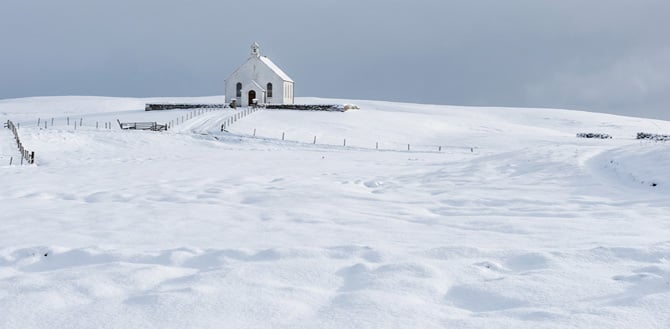
Famous for its traditional knitted jumpers, this remote Scottish island is also notable for its severe, snowy winters. Located off the north coast of Scotland, Fair Isle lies midway between the Orkney Islands and mainland Shetland and is home to only around 60 people2.
Due to its high latitude, days are short and nights are long in winter, with snow typically falling on around 60 days each year. But, as in Scandinavia, it’s a good excuse for locals to indulge in ‘hygge-style’ activities like tucking into lamb stews or knitting by the fire.
Average snowfall days a year: 633
3. Copley, County Durham
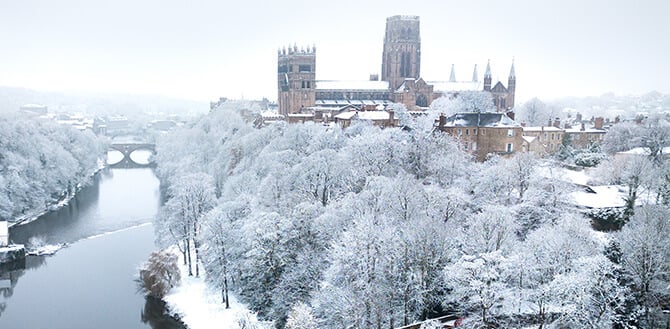
England’s snowiest location is the small village of Copley, high up in the North Pennines.
Just six miles from the historic market town of Barnard Castle, it offers dramatic wintry charm with lots of hilly scenery to enjoy. It’s also close to Weardale Ski Club, one of the few places in England with an outdoor snow sports centre.
Another of England’s snowiest locations also lies in County Durham. Widdybank Fell leads to the famous High Force waterfall, which offers a spectacular wintry scene complete with icicles hanging down.
Average snowfall days a year: 532
4. Eskdalemuir, Dumfries and Galloway

Back in Scotland but lower down this time, the village of Eskdalemuir is a top snow spot in the Borders. It’s home to one of the UK’s oldest weather stations, with data going back more than 100 years.
Surrounded by fields and hills, Eskdalemuir offers plenty of opportunities to go sledging, build a snowman or simply take in a wonderful snowscape.
The village also holds the record for the most rainfall in a 30-minute period. Incredibly, 80mm was recorded in just half an hour on 23 June 19535
Average snowfall days a year: 502
5. Sperrin Mountains, Northern Ireland
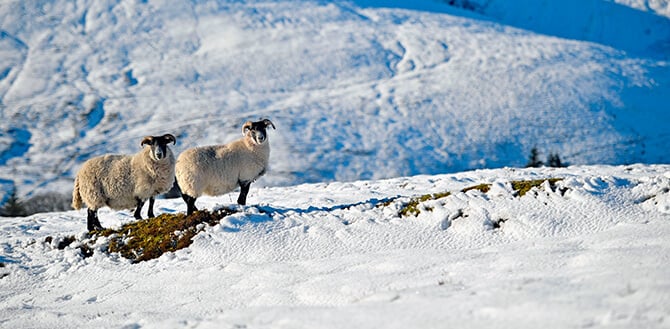
As one of the snowiest places in Northern Ireland, the Sperrins offer spectacular hill walks away from the crowds. In the colder months, they transform into a beautiful winter wonderland, with snow-covered peaks and frosty glens.
Located in County Tyrone, the Sperrins are further inland than other major ranges in Northern Ireland, leading to more frequent and significant snowfall in winter. Travel conditions through Glenshane Pass can often be challenging but you’ll see some gorgeous scenery.
Average snowfall days a year: up to 304
6. Eryri (Snowdonia), Wales
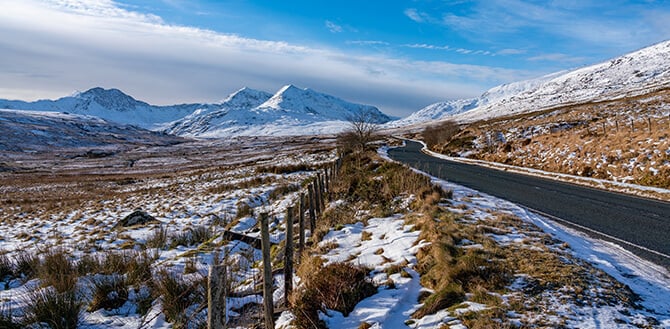
With a name like Snowdonia, you might expect this mountainous area of the country to be blanketed in snow for most of the year. But, in fact, Wales doesn’t get much of the white stuff compared with other parts of the UK.
Eryri typically sees between 10-30 days of snow each year, although it rarely hangs around for long. The tallest mountains and north-facing valleys, or cwms, are the most likely spots to see snow in Wales between October and March.
Average snowfall days a year: 10-304
7. Sheffield
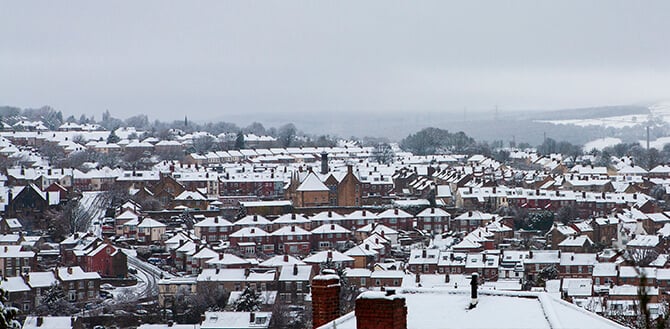
As for the snowiest city in the UK, that honour goes to Sheffield. It could perhaps have something to do with the fact that about a third of the South Yorkshire city lies within the Peak District.
Although it’s known as the Steel City rather than the Sleet City, Sheffield has around 11 snow days a year. That’s two more days of snow each year than the next snowiest cities of Birmingham and Newcastle, each with nine.
At the other end of the scale, Plymouth and Southampton are the UK cities least likely to experience snow, with the white stuff falling just one day per year on average.
Average snowfall days a year: 115
To protect your home against snow and ice damage, find out more about Ageas home insurance.