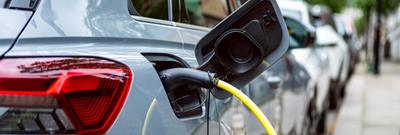
Sales of electric cars are booming. So much so that 1 new UK car registrations in 2025 were for battery-electric vehicles (BEVs).
In fact, electric car registrations grew throughout 2025, reaching over 23% of market share. The Tesla Model Y was the best-selling electric car model in the UK, followed by the Tesla Model 3 and the Audi Q4 e-tron.1
With the trend for switching to electric vehicles (EVs) gathering momentum, drivers will be wondering whether to buy an EV now or wait. An EV might help the UK meet its net-zero target, but buyers will want to know if it will improve your motoring experience and make financial sense. Here’s what to consider if you’re thinking about buying an electric car.
Easy as hack
Find out what new electric vehicles are eligible for the UK government’s plug-in grant.
At a glance
Key factors to consider when buying an electric car:
- Budget
- Charging
- Range
- Ongoing running costs
How do electric cars work?
Fully electric or battery-electric vehicles (BEVs) use electricity stored in a rechargeable high-voltage drive battery to power a motor that turns the wheels.
All types of hybrid electrical vehicles also have an electric motor powered by a high voltage battery but combine it with a petrol or diesel engine.
Typically, all EVs also have a separate, smaller battery – like the ones found in traditional fuel vehicles – that powers the onboard electronics, lights, wipers, central locking and restarts the car after you have turned it off.
Types of electric vehicles
If you’re thinking about buying an electric vehicle, you’ll want to know what type suits your needs best:
Electric vehicle
Battery electric vehicles (BEVs), plug-in hybrid electric vehicles (PHEVs), and hybrid electric vehicles (HEVs) are all generally defined as types of electric vehicles (EVs).
Battery electric vehicle (BEV)
Fully electric or battery-electric vehicles (BEVs) are only able to use electricity as their source of power, which is stored in a rechargeable high-voltage drive battery that powers a motor to turn the wheels.
Battery-electric cars don’t share all the same features as petrol and diesel cars. For example, there’s no exhaust pipe, fuel tank or fuel cap. There is, however, a socket for you to plug your electrical cable into.
Plug-in hybrid (PHEV)
Plug-in hybrids work by combining a traditional fuel engine with an electric motor and battery. You must charge the battery from an external power source, which allows electric-only driving for distances of typically 20–50 miles.
Hybrid (HEV)
Hybrid electric cars (HEVs) combine a traditional internal combustion engine with an electric motor and battery. The battery cannot be plugged into a recharging point and instead often recharges through regenerative braking or through the engine. It allows electric-only driving only for short distances.
Mild Hybrid electric vehicle (MHEV)
Unlike full hybrids, mild hybrid electric vehicles (MHEVs) cannot propel the car on electricity alone; their electric motor only boosts acceleration, aids braking, and enables smoother stop-start.
Hydrogen fuel cell vehicle (FCEV)
A hydrogen fuel cell vehicle (FCEV) is an electric vehicle that generates its own electricity on board by combining compressed hydrogen gas with oxygen in a fuel cell stack. Unlike battery EVs, FCEVs do not plug in – you refill the vehicle’s hydrogen tank in just a few minutes.
Where can I buy an electric vehicle?
Most traditional car dealerships sell electric vehicles, but you could go to a dealership that’s part of the Electric Vehicle Approved (EVA) scheme. You can also buy them from some manufacturer websites or through online-only retailers.
Buying a second-hand EV is the same as with a petrol or diesel model, but there are some valuable tips available from the Energy Saving Trust.
Before buying an EV, you should assess factors such as upfront price and running costs, including charging, maintenance, and insurance.
What are the most popular EVs?
There are more and more EVs available, from smaller models perfect for the school run or weekly shop to larger sports utility vehicles (SUVs). Here are some of the more popular models to get you started:
For a small run-around: Renault 5
The Renault 5 is a good choice, according to AutoCar, which says it combines usable range, good handling, a comfortable ride, an intuitive interior design and fuss-free technology.2 The car has a range of up to 250 miles and this car is eligible for the UK government’s £3,750 EV grant.
Sale price: from £22,985.
For SUV fans: BMW iX3
AutoCar gave 4.5 stars to the BMW iX3 Neue Klasse, saying it was ”decidedly good to drive” and exceptional range of 400-450 miles, depending on whether you’re on or off a motorway. All that means it doesn’t come cheap.
Sale price: from £65,170.
For range: Tesla Model 3
Tesla’s Long Range rear wheel drive (RWD) version of its popular Model 3 car has a range of up to 348 miles, according to Honest John, and is fun to drive.3 It also provides great efficiency and performance, backed by the Tesla charging network.
Sale price: from £39,935.
How much does an electric car cost?
Many people will be put off buying a new electric car simply because it is still likely to cost more than a new petrol or diesel vehicle. However, the price gap is narrowing – from around 50% in 2020 to around 40% in 2023.4
Look at the difference in the on-the-road (OTR) starting prices for petrol and electric versions of the same cars:
- Hyundai Kona – petrol5 = £27,270, Electric Advance = £32,000 (before discounts)6
- Vauxhall Corsa – petrol = £19,720, electric = £26,7807
- Peugeot 208 Allure – petrol = £22,645, electric = £27.6508
The UK government offers a plug-in grant for some low-emission vehicles, which can reduce the price that you will actually pay.
For example, band one vehicles – including the Nissan Leaf, Ford Puma Gen-E and Renault 5 (52 kWh) – qualify for a £3,750 grant. Band two examples include the Peugeot e-208, Nissan Micra-e and the Mokka Electric, which qualify for a £1,500 grant.9
How much does it cost to run an electric car?
EVs can have a higher purchase price than a petrol or diesel car but running costs can work out cheaper. Analysis10 predicts that certain drivers buying a new EV could recoup the additional upfront cost within five years. Costs include:
- Charging – this usually costs less than fuelling a petrol or diesel vehicle, but it depends on how you use your vehicle and where you charge it.
Charging at home offers the best deals – between 7p and 10p per kWh11 if you have an off-peak domestic tariff that enables you to charge your car when electricity demand is low (at night, for example). The cost will also depend on the size of your car’s battery, but charging a medium-sized electric car at home can be significantly cheaper than refuelling an equivalent petrol vehicle, particularly when using off-peak tariffs. Actual savings may vary.4
While charging at home offers the cheapest deal, public charging can cost much more – on average, 54p/kWh on 3kW chargers and 76p/kWh for 50kW chargers, according to Zapmap.
- Charge point installation – The Energy Saving Trust estimates that the average cost of a home installation is around £800-£1,200.
- Maintenance12 – EVs have fewer parts and a different braking system, which can reduce some maintenance costs, however the battery and tyres can be very expensive. Servicing also tends to be cheaper.
- Tax – electric cars will be subject to the annual road tax13 (vehicle excise duty) charge of £195 from April 2026. However, EVs are exempt from charges in clean air zones like London’s ULEZ.
Electric cars are now subject to road tax,13 and from April 2026, most will attract the standard £195 annual rate, but new, qualifying EVs with a list price of more than £50,000 will incur an extra yearly supplement of £425 per year.14
For more detailed information, see our guide to road tax for electric cars.
Electric car drivers’ 100% exemption from the London congestion charge has ended, but there is still a 25% discount if EV drivers pay using Transport for London’s Auto Pay system.
Electric cars are still exempt from London’s ULEZ charge, saving £12.50 a day, and other clean air zones across the UK.
Find out more about what congestion charge electric vehicles have to pay.
How do I charge an electric car?
You charge an electric vehicle by plugging a cable into the vehicle’s charge port, similar to a mobile phone, so one of the most significant issues any driver of an electric car needs to consider is how and where they will charge their vehicle:
- If you can charge at home, this will be more convenient and cheaper. This usually involves the installation of a dedicated 7kW home charger. You can use a three-pin socket, but charging is very slow and generally only worthwhile in emergencies.
- If you can’t charge your car at home, does your employer provide electric car chargers?
- If you can’t charge at home or work, where else can you charge?
- Public charging at motorway service areas, petrol stations and specialised hubs is the common way to charge an electric car. Are there public charging points near you, and how much do they cost to use? Work out if it would be cheaper to stick with buying petrol or diesel.
Check this out – our guide to electric car charging.
Electric car charging infrastructure
Stats from Zap Map16 show that at the end of December 2025, there were 87,796 electric vehicle charging points in the UK across 45,033 charging locations. In addition, more than one million charging points are installed at home or work,15 according to the latest available data.
This number remains small compared to the number of petrol pumps available at fuel stations throughout the country. It’s also worth noting the regional differences: Greater London has the most EV charging points with 27,986, followed by the South East with 11,405 and the West Midlands with 7,882.16
Charging points are categorised into four speeds or power ratings: ‘slow’, ‘fast’, ‘rapid’ and ‘ultra-rapid’, but the time involved will be a very different experience to refuelling a petrol or diesel car, which will usually only delay your journey by a few minutes.
Charging an electric car is similar to charging a smartphone. As a result, if you don’t plan your recharging stops, it can make your journey far longer – or worse, you could end up stranded in a car that has run out of charge and won’t take you anywhere.
How are electric cars maintained?
Electric cars don’t have fuel systems, spark plugs or exhaust systems and are potentially cheaper and easier to maintain. However, they still need regular servicing to keep them running optimally. Many manufacturers recommend that their electric cars be serviced yearly or every 10,000-20,000 miles, whichever comes first.
What’s included:
- Battery and charging system checks
- Brakes and brake fluid checks
- Checks of springs, dampers and tyres.
Research17 shows that battery-powered electric vehicles now have a lifespan of 18.4 years, similar to that of a petrol engine and surpassing that of a diesel engine.
Check this out: What’s a car service and do I need one?
Electric vehicle usage and range
Think about how you typically use your current car, as this will affect how often you need to charge an EV if you decide to buy one. Do you travel long distances, or do you only make short, local journeys?
Consider the EV’s average range and how many times you think that will mean charging your car in a month. EVs typically offer an average range of nearly 300 miles on a single charge, while some models offer much more – for example, the Mercedes-Benz EQS Saloon’s range is more than 450 miles.18
For urban driving, an EV with a range of 100-150 miles may be enough, while motorway journeys benefit from ranges of 250-300 miles or more.
What are the Government’s targets for EVs?
The UK Government has partially revised the zero-emission vehicle (ZEV) mandate. It has pledged19 to stop the sale of new cars powered solely by petrol and diesel by 2030, and to ban new hybridised vehicles by 2035.
This adjusted approach follows the European Union’s decision to soften its ban on petrol and diesel cars. The aim is to help ease the transition and give manufacturers more time to prepare.
As part of the mandate, carmakers in the UK must meet annual percentage targets20 for new electric car sales, which rise from 33% in 2026 to 80% by 2030.
FAQs
Do you need a special driving licence for an EV?
No, you do not need a special driving licence for an EV – you can drive with a standard driving licence.
Are EVs only good as a second car?
Electric cars can be good as a second car. As with any type of car, their range has evolved, with some providing more than 300 miles per charge.
What is the range of an electric vehicle?
The range of an electric vehicle depends on its make, model and weight. However, EVs typically offer an average range of nearly 300 miles on a single charge, while some models offer much more – for example, the Mercedes-Benz EQS Saloon’s range is more than 450 miles.
Are EVs cheaper to insure?
Although the gap is narrowing, electric car insurance is generally higher than petrol equivalents due to factors such as higher vehicle values, battery repair costs and specialist technician requirements.21 Research by the Institute for Energy Research found EV premiums are twice as high.
If you are considering buying an electric vehicle, Ageas can help with the electric car insurance.
Are all EVs automatic?
Almost all EVs are automatic, so they don’t have a clutch pedal or a manual gear stick. This is because they have a single-speed transmission, which means the electric motor provides direct, consistent power without needing to shift gears, making them much simpler to drive than manual cars.
Will I get a charger with my EV?
Most EVs are sold with a charging cable, but you typically won’t get a home charging point as part of the deal. You will generally have to pay a professional to install a dedicated 7kW home charger.
Is it financially better to buy an electric car?
Whether it’s financially better to buy an electric car depends on factors such as the vehicle’s upfront price, the cost of charging versus purchasing petrol or diesel, and maintenance and insurance costs.
Is it wise to buy a petrol car?
It depends on how you use your car, but driving petrol cars won’t be banned in 2030 – it’s just that the government is stopping the sale of new vehicles that run solely on petrol.
How much does an EV battery cost to replace?
The cost of replacing an electric vehicle (EV) battery in the UK varies significantly by vehicle make, model and battery size, with average costs for a complete replacement typically ranging from £8,000 – £15,000. 22
What is the lifespan of an EV battery?
The batteries in EVs do degrade over time and with use. Still, they should have a lifespan of between 10 years and 20 years, depending on driving habits, charging practices and climate – extreme cold or heat can negatively affect a battery. Most vehicle manufacturers offer a battery warranty of around eight years or 100,000 miles23 if there is failure or an unacceptable drop in battery performance.
Find out about the electric vehicle insurance from Ageas.
Sources
- https://www.smmt.co.uk/uk-new-car-market-breaches-two-million-as-almost-one-in-four-buyers-go-electric/
- https://www.autocar.co.uk/car-news/best-cars/best-small-electric-cars
- https://www.honestjohn.co.uk/tesla/model-3
- https://www.gov.uk/government/publications/electric-vehicles-costs-charging-and-infrastructure/electric-vehicles-costs-charging-and-infrastructure
- https://www.hyundai.com/uk/en/models/kona/trims-prices.html
- https://www.hyundai.com/uk/en/models/kona-electric/trims-prices.html
- https://store.vauxhall.co.uk/selector/configurable/corsa-5-door-hatchback
- https://store.peugeot.co.uk/selector/configurable/208-5-door/allure/1-2l-100-s-s-6-speed-manual-petrol/agueda-yellow/tri-material-casual-lomsa-embossed-fabric-leather-effect-and-cloth-seat-trim-with-quartz-stitch-detail?channel=b2cc
- https://www.thecarexpert.co.uk/electric-car-grant-all-the-evs-with-discounts/
- https://assets.publishing.service.gov.uk/media/6554be55544aea000dfb2d59/zev-mandate-consultation-final-cost-benefit-analysis.pdf
- https://www.moneysavingexpert.com/utilities/ev-energy-tariffs/
- https://www.evaengland.org.uk/about-electric-vehicles/benefits-of-evs/
- https://www.gov.uk/guidance/vehicle-tax-for-electric-and-low-emissions-vehicles
- https://www.gov.uk/government/publications/vehicle-excise-duty-for-expensive-car-supplement-threshold-increase-for-zero-emission-vehicles/increase-in-the-vehicle-excise-duty-expensive-car-supplement-threshold-for-zero-emission-cars
- https://www.gov.uk/government/consultations/consultation-on-the-introduction-of-electric-vehicle-excise-duty-eved/consultation-on-the-introduction-of-electric-vehicle-excise-duty-eved
- https://www.zapmap.com/ev-stats/how-many-charging-points
- https://www.nature.com/articles/s41560-024-01698-1
- https://www.carmagazine.co.uk/car-reviews/mercedes-benz/eqs-saloon/
- https://www.gov.uk/government/news/backing-british-business-prime-minister-unveils-plan-to-support-carmakers
- https://www.gov.uk/government/publications/vehicle-emissions-trading-schemes-vets-order-2023-updates/updates-to-the-vehicle-emissions-trading-schemes-vets-order-2023
- https://www.instituteforenergyresearch.org/renewable/ev-insurance-premiums-in-the-uk-cost-twice-as-much-as-those-for-gasoline-vehicles/
- https://greentecauto.co.uk/ev-battery-replacement-in-the-uk-2025-costs-options-and-what-you-need-toknow/
- https://www.evaengland.org.uk/about-electric-vehicles/ev-faqs/