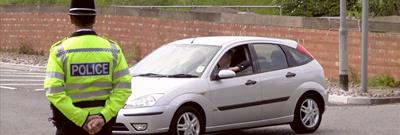
If you received a speeding ticket from the police, you may be wondering how it will affect your car insurance.
Here’s what you need to know about how it could affect your premium, what factors make a difference, and some smart ways to keep costs down.
EASY AS HACK
Your speeding ticket may impact your insurance in the following ways.
- Your premium will usually go up.
- The more points or offences you have, the bigger the
- Points stay on your driving record, affecting pricing over several renewals.
- Avoid further offences to help prevent future premium increases.
At a glance
Speeding is one of the most common motoring offences, accounting for 29% of all motoring prosecutions in England and Wales in 2024.[1]
what are the penalties if you are caught speeding?
Speeding is the most common driving offence in Britain, with 86% of violations and 2.3 million speeding tickets in 2023[2]. If you’re caught, here’s what could happen.
- Verbal warning – for minor or first-time offences, a police officer may warn you verbally or ask you to attend a speed awareness course if you’re eligible. However, it’s at the police’s discretion.
- Speed awareness course – instead of a fine and points on your licence, the police may offer a place on a course.[3] Reasons for not being offered the option include being considerably over the limit or having attended a speed awareness course within the past three years.
- Penalty points – from three to six penalty points on your licence.[4]
- Fines – a minimum of £100 up to £2,500 maximum, depending on where you were caught and how you plead.
- Disqualification – if you accumulate 12 penalty points or more within three years, the court will disqualify you from driving. It can last from six months to a lifetime ban.
- Charges for dangerous driving – you can get points on your licence for reckless and dangerous driving, which stay on your record for 11 years in the most serious cases.
Learn more about driving licence penalty points.
will your car insurance increase after a speeding ticket?
If you accumulate points on your licence, you should be aware that this could lead to a higher cost for your car insurance.
You’ll see an increase in your insurance premium at renewal after receiving a speeding ticket because insurance providers view individuals with driving offences as being at a higher risk of accidents.
what factors will influence the cost increase?
How much car insurance increases after a speeding ticket depends on the following factors:
- The severity of the offence
- How many points exist on your licence
- Other considerations include your driving history, age, the car you drive, and any no-claims bonus.
Each insurer uses its own risk models to determine the average premium increase for a speeding ticket.
do you have to tell your insurance provider about driving licence points?
You must tell your insurance provider about any points on your driving licence when your policy is due for renewal or, if you received a driving ban, you should tell them straight away for the following reasons:
- Failing to do so could invalidate your policy
- It could lead to charges of insurance fraud
You should always be honest with your car insurance company about the number of points you have and when the offence occurred. However, you don’t have to tell your insurer if your penalty points have expired.
how long do penalty points affect your insurance premium?
Most penalty points remain on your licence for 4 years, but this depends on the seriousness of the offence. They could stay on your licence for up to 11 years if speeding led to a fatality, especially when drugs or alcohol are involved.
how can i reduce my insurance premium if i have a speeding conviction?
After a speeding ticket and conviction, you may be able to reduce your car insurance costs. Here are some of the ways to reduce your premiums:
- Telematic box – some insurers provide a ‘black box’ which need to be fitted inside your car and allows them to monitor your driving and reward you with lower premiums if you drive safely. If your current insurer doesn’t provide this, you may need to switch to one that does.
- Increase your excess – you could reduce your premium by increasing your voluntary excess, but you’ll need the money to pay the excess if you claim.
- Reduce your mileage – use public transport instead of the car to reduce your risk and your premium until your points are spent.
- Improve your security – secure your car in a safer spot, such as an alarmed garage, which could bring down your premiums.
- Pay annually – sometimes it’s less expensive to pay your premiums in a lump sum rather than paying interest on monthly charges.
- Adjust your cover – removing optional extras or switching from comprehensive to third party, fire and theft could lower your premium. Just keep in mind that this might mean changing your insurer too and it’s important to check whether the new cover is suitable for your situation.
Find out what kind of car insurance cover to get.
These strategies apply to anyone who wants to lower their premiums, not just those who have received a speeding ticket.
how many penalty points do speeding offences carry?
Each of the various speeding offences carries 3 to 6 penalty points, depending on the severity of the motoring offence. The endorsement code for speeding starts with the letters SP and will stay on your driving record for 4 years.
The different offence types are:
- SP10 – Exceeding goods vehicle speed limits
- SP20 – Exceeding speed limit for vehicle type (not goods or passenger vehicles)
- SP30 – Exceeding the statutory speed limit on a public road
- SP40 – Exceeding passenger vehicle speed limit
- SP50 – Exceeding speed limit on a motorway
The core SP codes apply to the driver, but other related codes apply to people who are legally responsible, even if they are not physically driving the vehicle. They may have aided or abetted, caused or permitted, or incited the offence.
For example, SP10 is applied to the licence of a goods vehicle driver who has committed a speeding offence. Other codes, like SP12 (aiding and abetting SP10), mean someone who knowingly helped them speed, whereas SP14 (causing or permitting SP10) applies to someone, like an employer, who creates a schedule that requires the driver to meet it only by speeding.
Learn more about driving conviction codes and how they work.
how many penalty points do speeding offences carry?
You will receive a minimum fine of £100 (and 3 penalty points) for speeding. However, the court may impose a higher penalty based on the speed limit and how far you exceeded it. The maximum penalty is £1,000, or £2,500 for speeding offences on motorways.
The cost is based on how much you exceed the speed limit. The Sentencing Council [5] categorises fines into bands calculated on your weekly income:
- Band A (25% – 75% of your weekly income)
- Band B (75% – 125% of your weekly income)
- Band C (125% – 175% of your weekly income)
Bands B and C may also disqualify you from driving for up to 56 days or longer. Band C is the most severe tier of speeding fines, where you were significantly over the limit.
can i take a speed Awareness course instead?
In 2024, 1,650,322 drivers chose to attend a speed awareness course, an increase of 4% on the previous year (1,576,401).[6]
The police may consider you eligible for a speed awareness course instead of points and a fine, although you must pay the course fee (typically from £100 to £150).
In specific circumstances, the police will not offer an awareness course. For example, if you were convicted of speeding in the last 3 years. You can book the course through the National Driver Offender Retraining Scheme.[7]
how are you notified if you have been caught speeding?
The police may issue a verbal warning if they stop you for speeding. Alternatively, they could send you a Fixed Penalty Notice (FPN), a conditional offer of a fine and penalty points. They can also order you to attend court (you’ll receive a letter telling you what to do).[4]
If a speed camera catches you speeding, the vehicle’s registered keeper will receive a notification from the police within 14 days, including:
- A Notice of Intended Prosecution (NIP)
- A Section 172 notice
The NIP is a formal letter you’ll typically receive by post, warning that you may be prosecuted for a driving offence. It will contain the details of the speeding offence and other information, such as your registration plate.
A Section 172 Notice under the Road Traffic Act 1988 formally requests the vehicle’s registered keeper to identify the driver who is suspected of speeding. It is an offence if you do not respond within 28 days, and you may have to go to court if you do not.[4]
Once you have returned the NIP, the police may then issue an FPN.
can you be prosecuted for speeding?
Yes, you can be prosecuted for speeding, although minor offences usually result in an FPN instead. If you receive an FPN and accept guilt, you pay the fine and take the points, typically £100 and 3 points on your licence.
But if you decide to plead not guilty, you’ll attend court and may face a higher fine and more points if you’re found guilty.[8]More serious cases can lead to higher penalties, bans or dangerous driving charges.
You may have to go to court if 8 or more points were already on your licence when you were caught speeding, or you were driving significantly above the speed limit. A referral to court is also probable if you were not eligible for a driver retraining scheme course.[9]
Your eligibility for the driver awareness course will depend on how narrowly you exceeded the limit set by the National Police Chief Council (NPCC).
- 31 mph in a 20 mph zone
- 42 mph in a 30 mph zone
- 53 mph in a 40 mph zone
- 64 mph in a 50 mph zone
- 75 mph in a 60 mph zone
- 86 mph in a 70 mph zone [9]
how fast do you have to be speeding to get prosecuted?
These are the guidelines given by the Government in the UK:
|
Speed limit |
Fixed penalty |
Speed awareness may be offered between |
Summons to court from |
|
20 mph |
24 mph |
24–31 mph |
35 mph |
|
30 |
35 |
35–42 |
50 |
|
40 |
46 |
46 53 |
66 |
|
50 |
57 |
57–64 |
76 |
|
60 |
68 |
68–75 |
86 |
|
70 |
79 |
79–86 |
96 |
Even 1 mph over the speed limit could result in a fine. However, many UK police forces apply a 10% + 2 mph threshold above the notified speed limit to account for calibration differences in equipment. So, you could be doing 46 mph in a 40 mph zone before you’re penalised.[10]
can you get disqualified for speeding?
You can be disqualified for speeding in the following circumstances:
- You have 12 or more penalty points received over 3 years
- The offence circumstance, your situation and the number of disqualifications you have had previously will influence the length of a ban:
- If it’s your first disqualification within 3 years, typically, you will get a 6-month ban or less
- 2 within 3 years: 12-month ban
- 3 within 3 years: 2-year ban
what happens if you get disqualified?
If you are disqualified, you cannot drive for the period of your disqualification.
- If your disqualification is less than 56 days, you can drive again once the ban is over.
- If it’s more than 56 days, you must apply for a new licence when the disqualification ends.
how do i check my penalty points?
You can check your penalty points on the GOV.UK website.
FAQs
can i speed in an emergency?
No, you should not speed during an emergency unless you’re driving an emergency vehicle like an ambulance or a police car.
can i be convicted for driving too slowly?
Although there is no universal minimum speed limit under UK law, you can be convicted for driving too slowly under general driving-offence law.Driving unnecessarily slowly is dealt with under the offence of careless or inconsiderate driving (driving without due care and attention), so the police could pull you over for it.[11] The police could issue a fixed penalty or refer it to court, depending on how far below the appropriate speed you were and the risk you caused.
Minimum speed limits may apply on certain roads, such as tunnels.
what is the national speed limit in the uk?
The UK has several national speed limits. Wales also has a default 20 mph limit, rather than the national 30 mph limit, for built-up areas.
- Motorways – 70 mph
- Single carriageway road – 60 mph
- Single and dual carriageways with streetlights – 30 mph
Visit GOV.UK for more information on the UK’s speed limits.
Sources
[1] Gov.uk - Criminal Justice Statistics quarterly: December 2024
[2] Gov.uk - Police powers and procedures: Roads policing, to December 2023
[3] The TTC Group - National Speed Awareness Course (NSAC)
[4] Gov.uk - Speeding Penalties
[5] Sentencing Counsel - Speeding (Revised 2017)
[6] UKROEd - Trend & Statistics
[7] UKROEd - National Driver Offender Retraining Scheme
[8] Sentencing Counsel - Speeding
[9] Police.co.uk - If you’ve received a speed camera activation letter or notice
[10] Avon and Somerset Police - Speed Enforcement:Your Questions answered