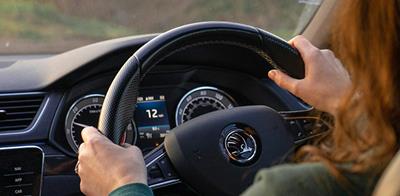
Our research reveals how different drivers view themselves behind the wheel, including who considers themselves a conscientious driver.
Turns out, the car you drive can say a lot about how you see yourself on the road.
But are certain cars more likely to attract drivers who see themselves as conscientious, and where in the UK are they most common?
We surveyed 2,000 UK drivers to find out. The results revealed just how conscientious drivers of various brands and locations view themselves behind the wheel.
When it comes to driving, what exactly is conscientiousness?
Conscientiousness is a personality trait that reflects how organised, careful, and dependable a person sees themselves.
On the road, it can translate into habits like keeping a safe distance, anticipating the actions of others, and remaining patient in traffic.
To measure conscientious driving, our study surveyed 2,000 UK motorists using questions from the Big Five Personality Test – a globally recognised framework widely used in psychology to assess personality traits.
Each participant’s responses were used to calculate a ‘Conscientious Driving Score’ between 1 and 40. The higher the score, the more conscientious a driver considers themselves to be.
Which drivers see themselves as the most conscientious?
Our data points to some clear frontrunners.
Skoda drivers came out on top, with an average score of 29.63 out of 40. Nearly half (48%) consider themselves highly conscientious.
Volvo and Dacia drivers followed closely behind, with scores of 28.59 and 28.50.
The results suggest that drivers of practical, reliability-focused brands are much more likely to describe themselves as organised, structured, and detail-focused.
On the other hand, drivers of more premium or lifestyle-oriented brands, like Land Rover (25.36) and Mercedes-Benz (25.37), appear to view their driving style differently, with their responses suggesting a more relaxed or flexible approach.
|
Car Brand |
Conscientious Driving Score |
|
Skoda |
29.63 |
|
Volvo |
28.59 |
|
Dacia |
28.50 |
|
Renault |
28.42 |
|
Seat |
28.09 |
|
Mini |
27.70 |
|
BMW |
27.57 |
|
Volkswagen |
27.39 |
|
Vauxhall |
27.24 |
|
Ford |
27.08 |
|
Hyundai |
26.99 |
|
Nissan |
26.95 |
|
Audi |
26.69 |
|
Kia |
26.60 |
|
Tesla |
26.38 |
|
MG |
26.21 |
|
Toyota |
26.18 |
|
Peugeot |
25.78 |
|
Mercedes-Benz |
25.37 |
|
Land Rover |
25.36 |
How do drivers’ self-perceptions vary across the UK?
Where you live also appears to have a bearing on how conscientious drivers say they are.
Belfast’s drivers are most likely to describe themselves as careful and considered, with the Northern Irish capital topping our rankings.
Glasgow, Leeds and Sheffield follow closely behind, with scores of 28.45 and 28.19, respectively.
At the other end of the scale, drivers in Southampton (25.61), Brighton (25.86), and Norwich (26.02) were the least likely to view themselves as conscientious.
As with the car manufacturer findings, it's worth keeping in mind that these scores reflect how drivers perceive themselves, and aren’t a direct measure of driver behaviour.
|
City |
Conscientious Driving Score |
|
Belfast |
29.10 |
|
Glasgow |
28.45 |
|
Leeds |
28.19 |
|
Sheffield |
28.19 |
|
Cardiff |
28.11 |
|
Plymouth |
27.46 |
|
Nottingham |
27.08 |
|
Newcastle |
26.93 |
|
London |
26.82 |
|
Birmingham |
26.58 |
|
Bristol |
26.50 |
|
Manchester |
26.49 |
|
Edinburgh |
26.39 |
|
Liverpool |
26.17 |
|
Norwich |
26.02 |
|
Brighton |
25.86 |
|
Southampton |
25.61 |
Why being a conscientious driver matters, and how to become one
Drivers who see themselves as more conscientious may be more likely to keep a safe distance, anticipate the actions of others, and remain patient in traffic.
These habits can help create a smoother, safer, and more predictable driving environment for everyone.
Here are some simple ways to sharpen your driving habits:
- Plan your route before you set off. Knowing where you're going can reduce stress and help keep your focus firmly on the road.
- Give yourself enough time. Rushing can lead to poor driving decisions. Leaving a little extra time in your schedule makes for a calmer, more considered drive.
- Carry out regular vehicle checks. Tyres, lights, fluids, and mirrors - quick checks before you leave can help you spot problems before they become bigger ones.
- Stay alert to other road users. Watch for pedestrians, cyclists, and other vehicles, and try to anticipate what may happen next.
- Minimise distractions. Phones, snacks, or loud music can pull your attention away. Keeping them out of sight and mind helps you stay focused and safe.
You can find official guidance in the Highway Code.
Karen Hay, Consumer Psychologist at Ageas, commented:
“This study gives us a useful window into how different drivers see themselves behind the wheel. What comes through strongly is that drivers tend to describe their driving in ways that feel familiar and true to them, whether that’s being organised, calm, flexible or simply prepared for everyday situations. It’s a very human way of talking about driving, and it reflects the everyday habits and attitudes people bring to the road.
These insights don’t tell us how people drive day-to-day, but they do highlight the self-perceptions and confidence people hold about their driving. Understanding that helps us communicate more clearly with different types of drivers and support them in ways that feel natural and reassuring.”
We're here to support conscientious drivers on every journey
Whether you drive a Skoda or a Seat, a city car or a family estate, we're here to support drivers with our car insurance.
Some of the benefits of insuring with us include:
- If your car is damaged in an accident and you can't drive it, we can arrange transport for you and your passengers to get home or to your planned UK destination safely.
- If you need to make a claim, you're supported by a UK-based claims helpline available 24/7.
- If you have an accident, our approved repairer will collect your car, fix it, and return it to you. Plus, we'll provide a courtesy car while yours is being repaired.
- You can manage your policy or make a claim easily online, any time.
Get a quick quote or contact us for support.
Methodology
Ageas partnered with Censuswide to survey 2,000 UK motorists, using questions from the Big Five Personality Test to see how they scored for conscientiousness. Respondents were given a Conscientious Driving Score between 1 and 40, with a higher score meaning someone views themselves as a more conscientious driver. The test used the variation of questions and scoring matrix found on the IPIP Big Five Factor Markers. Motorists classed as highly conscientious scored between 31 and 40. Data accurate as of March 2026.